Creative Options for Island End Caps

With islands becoming more of a standard kitchen feature, more imaginative ideas are emerging for how to use island end caps. Depending upon whether the homeowner prefers them to be a focal point or simply to blend in plays a role in the ultimate design.

“Understanding the client’s needs along with the overall design aesthetic helps me to guide them with end cap options,” shares senior Harrell designer, Sara Jorgensen. “During our in-depth planning meetings, I ask a lot of questions: Do they prefer clean, simple lines? Do they need more storage or want a place to showcase special kitchen platters or décor? Do they want a special spot for their kitty or pup?”
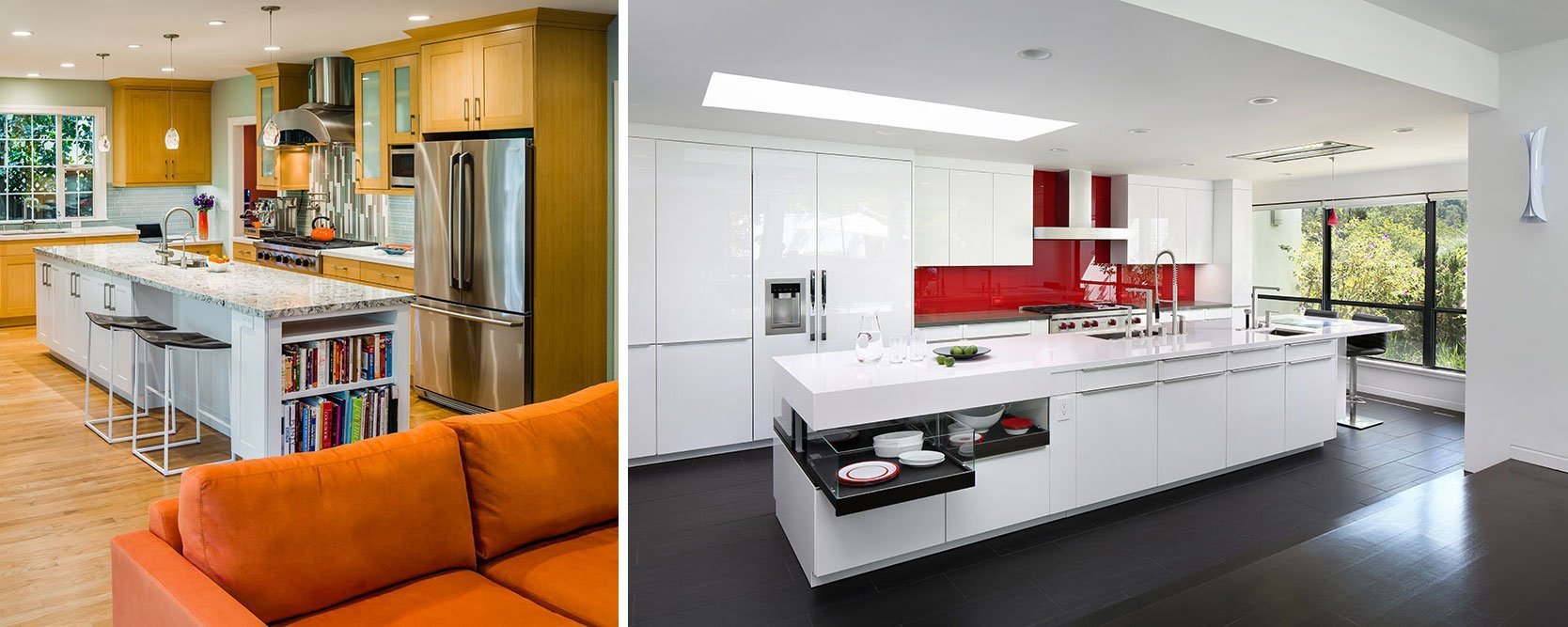
Creative ways to use island end caps include:

Open bookcase: End caps offer an ideal location to house and display favorite culinary tomes.

Storage: Most homeowners can use more rather than less storage. End caps offer perfect locations to visually highlight key display pieces facing the living space. This could be open storage or a cabinet with beautiful glass doors and interior illumination. For hidden storage that is easily accessed, adding in drawers or doors on the opposite side allows frequently used item to be tucked away. This is a perfect place to store homework items, entertainment ware, beverage items, microwaves, and more.

Pet-friendly niche: Many people have pets and the kitchen is the primary location for food and water bowls. A special niche can be designed into an end cap, typically on the side facing into the kitchen, where bowls can be recessed and tucked out of the path of (human) travel. They can even be elevated for larger pets.

Wine rack: For wine lovers, incorporating a custom wine rack into their island end cap allows them to display their collection as well as have favorites close at hand.

Waterfall edge: For those who love the crisp, clean look of a continuous countertop, a waterfall edge is a stunning use of end caps. The counter material continues vertically all the way to the floor, creating a simple, uninterrupted line. Alternately, a waterfall edge can be created using a contrasting material such as natural wood.

Decorative element: As an alternative to a waterfall edge, end caps can be used to create a decorative element that offers visual appeal. This design can then be repeated in other areas throughout the kitchen. These elements can be traditional, classic, modern, farmhouse, or contemporary and as ornate or simple as desired.

“Determining which option works best is a very personal decision based on lifestyle, function, and personal preference,” Sara confirms. “But there are a lot of resourceful options to put island end caps to great use.”

If a kitchen, bath, or even a whole home remodel is something you would like to explore, we invite you to set up a consultation with a member of the Harrell Design Team. We also encourage you to visit our online project gallery to see our extensive kitchen, bath, and even whole-house remodels.

Sara Jorgensen, one of Harrell Design + Build’s award-winning designers, artfully executes her clients’ design desires coupled with their functional needs. Sara’s creative passion, authenticity, and open style of communication, enabling her to provide an innate understanding of client needs to the Harrell Design + Build Design + Build team. “Some clients know their style. Others need inspiration. Through the design exercises in which my clients’ partake, we come easily to an understanding of their preferences. The ultimate goal is to create a beautiful, timeless, on-budget, and functional project,” says Sara. Sara works from a holistic viewpoint to the smallest of details that create the design’s ‘wow’ factor. Her designs have won awards from the NKBA, NARI and National CotY and encompass a wide variety of projects from Wine cellars, Yoga rooms, Master Suites, Kitchens, and Decks to whole house remodels. A Bay Area native, Sara holds a Bachelors of Fine Arts in Interior Design from San Jose State University. Sara is a California state Certified Interior Designer (CID) and a Certified Green Building Professional (CGBP). Outside of work, Sara enjoys kayaking, San Jose Sharks hockey, snowboarding, cycling, snowman building, spending time with family and relaxing outdoors. She is a proud committee member of the Santa Clara Valley Model T Ford Club and enjoys driving her Model T around California on various club tours.
Warming Drawers, Convection Ovens & Induction Cooktops

Good food and a warm kitchen are what makes a house a home. Warming drawers, convection ovens and induction cooktops are a popular choice in kitchens where cooking, entertaining or family gatherings are a focus.

Choosing the proper appliances to meet your culinary requirements is one of the many decisions a homeowner must consider during a kitchen remodel. Harrell Certified Kitchen Designer, Debra Winston advises her clients to consider how they cook, entertain, and their overall lifestyle when considering cooking units.

Debra explains, “Appliances for kitchens continue to evolve with more pre-programed settings to make cooking more pleasurable and more precise. There are many finish options now, available in suites such as matte black, shiny black, slate, rose gold, and the classic stainless steel. Look for smudge, scratch, and fingerprint resistant finishes. Also, newly popular is bright white in either a gloss or matte. Made with a powder coated finish, these whites won’t turn yellow with age. Bright pops of color such as orange or French blue can become an exciting focal point of the kitchen.”

Warming Drawers

These units are an entertainer’s must-have, perfect for warming food as well as keeping dinner hot for a family member who comes home late. It can also be used to warm plates and cups and is a champ at heating damp finger towels to the ideal temperature. They can also be used to proof bread and other yeasted doughs, make homemade yogurts or ferment foods. Warming drawers are typically 30 inches wide by 10 inches high and can be located below a wall oven or cooktop.

Convection Ovens

These ovens use a fan to uniformly circulate hot air, which results in faster cooking at lower temperatures. Convection units create an even, golden brown for baked goods and a toothsome crispy texture for baked poultry. Though available in gas and electric, the latter is preferred for baking. Convection ovens come in a variety of sizes as well as freestanding and wall units, ensuring you can choose the appliance that best fits your new kitchen design.

Induction Cooktops

Cooking with induction is safe, fast, and much more energy efficient than gas or electric. These cutting-edge cooktops and ranges use electromagnetic coils under a glass surface to create heat directly into cast iron, carbon steel, or magnetic stainless-steel cookware. (Aluminum, copper, and glass won’t conduct heat on an induction cooktop.) Since the heat is transferred directly to the cooking vessel, cooking is accelerated while the cooktop itself remains cool. This effective, innovative and easy-to-clean design is ideal for households with young children and also works well as a Universal Design feature. Believe it or not, this technology has been around for quite a while, and prices have come down significantly. (One note of caution; if someone with an implanted pacemaker is very close to the cooktop for an extended period of time, there may be some interference from the magnetic field).

Harrell Design + Build’s premier design team is here to help you create the kitchen of your dreams, including offering insights into the brands and types of appliances to fit your lifestyle and budget. Contact us to set up a complimentary meeting at our Palo Alto showroom with one of our award-winning designers to explore your kitchen remodel.

Debra has been with Harrell Design + Build Design + Build for five years. She has a Bachelor’s degree in Fine Arts, is an accomplished painter and quilt artist, and spent 13 years working for Ralph Lauren in New York City as a fashion designer before moving to California. She studied Interior Design at Cañada College, where she specialized in Kitchen and Bath Design. She worked as an Interior Designer prior to joining the Harrell Team in April 2014. Debra has received numerous awards for her designs, her specialty being Kitchen and Bath redesign, as well as color consultation. She is a passionate Universal Design Certified Professional (UDCP), and also works on whole-house remodels and room additions.

Designing Beautiful and Functional Baking Stations

Cabinet Lighting Trends

Cabinets are a key feature for both function and aesthetics in every home, especially in the kitchen. There are numerous ways in which to illuminate cabinets to showcase special décor, provide focused task lighting, and even automatically light up blind or corner cabinets when opened.

Under-Cabinet Lighting

According to Harrell Design + Build designer Debra Winston, under-cabinet lighting is the most important source of illumination in the whole kitchen. It offers concentrated, no-glare task lighting that is ideal for chopping, fine mincing, measuring, or reading recipes from the cookbook. Under-cabinet lighting is cleverly hidden from sight by adding a 1 1/2-inch light-rail mounted on the bottom front edge of the cabinet.

Accent Lighting

Lighting in glass display cabinets highlights special dishware or objets d’art. A single puck light can be built into the inside top of the cabinet or LED light strips can be recessed down the interior sides of the cabinet. With the single light option, Debra recommends having glass shelves so light shines down throughout the cabinet and brightens the entire display. Inset LED strips provide an equal amount of light from top to the bottom allowing the use of wooden shelves, and illuminating the entire cabinet evenly.

Up-Lights

To create general ambient lighting with a subtle glow, up-lights can be installed on the tops of wall cabinets that do not go all the way up to the ceiling. They reflect off the ceiling and provide an attractive atmospheric effect. As with under-cabinet lighting, low profile up-lights can easily be hidden from view behind the cabinet crown molding. This can be a nice solution to an Eichler home where no attic means recessed cans cannot be installed.

Corner or “Blind” Cabinet Lighting

Corner or blind cabinets tend to be deep and homeowners often can’t easily see inside. Installing lights that turn on when the cabinet door is opened provides much-needed visibility, especially for blind base cabinets.

Night Lighting

A Universal design feature, installing dimmable strip lighting beneath the cabinet toe-kick functions as a night light, providing subtle illumination near the floors. This feature is especially useful in bathrooms as well as in kitchens.

“There are numerous ways to incorporate lighting in your cabinets, whether they are in the kitchen or are built-ins located in Great Rooms or Master Suites. Efficient, long-lasting LED lighting can even be connected to smart home systems, allowing the homeowner to control their entire house from one panel or remotely via a phone app,” shares Debra.

Could your home use a little illumination? Harrell Design + Build has been designing and remodeling distinctive homes in Silicon Valley and the San Francisco Bay Area since 1985. We invite you to schedule a complementary consultation with one of our talented designers to discover the possibilities for your home.

Debra has been with Harrell Design + Build Design + Build for five years. She has a Bachelor degree in Fine Arts, is an accomplished painter and quilt artist, and spent 13 years working for Ralph Lauren in New York City as a fashion designer before moving to California. She studied Interior Design at Cañada College, where she specialized in Kitchen and Bath Design. Debra worked as an Interior Designer prior to joining the Harrell Team in April 2014. Debra has received numerous awards for her designs, her specialty being Kitchen and Bath redesign as well as color consultations. Debra is a passionate Universal Design Certified Professional (UDCP), and also works on whole-house remodels and room additions.

Peninsula vs. Island: How to Know Which Works in Your Kitchen

Outlet Technology

Earlier this year, Harrell Design + Build Designer Genie Nowicki, spent three days at the annual Kitchen & Bath Industry Show (KBIS) where she was immersed with the latest industry products, trends, and technologies. Although not as sexy as steam showers, spa bathtubs, and the latest fixtures, electrical outlet technology was prevalent at KBIS.

According to Genie, “Kitchens and bathrooms have considerable code requirements. These are spaces in which numerous appliances are used around water, so there are strict guidelines around the placement and type of outlets used. At KBIS, there were some really exciting solutions to make unsightly outlets more visually pleasing, or unique ways to hide them completely.”

Outlet Technology

With more and more devices requiring USB ports for charging, electrical outlets are finally incorporating this technology and docking stations are being integrated into kitchens and baths.

Smart WiFi plugs are remote control devices, enabling automation to actively manage any appliance, light, or device via an app or using a smart home assistant. Affordable and easy to install, these smart plugs allow you to control or schedule lights and temperature, pre-heat hair styling devices with the touch of a button, regulate your kid’s access to gaming consoles and television, and monitor your home’s energy efficiency.

For years, outlet trim plates have been available in a variety of colors, designs, and finishes but the outlets themselves hadn’t followed suit. Finally, outlets are being designed in a number of metallic finishes to create a seamless, cohesive appearance.

Creative Outlet Placement in the Kitchen

GFCI outlets are required to be placed every four feet in a kitchen, and within two feet or less of the edge of a sink or cooking surface. There are multitudes of ways to make outlets less conspicuous, maintaining function without compromising the aesthetics of your space.

  • Under cabinet outlets: The outlet or outlet strip is hidden from view but may have “dangling” appliance cords.
  • Pop-up outlets: Tucked into the surface of a countertop, these low-profile outlets are made accessible by simply pushing on the them to have them ‘pop’ above the counter or pushing them down to hide them away. These may not be accepted by all building departments.
  • Outlet post: Nestled between cabinets, a post is a great way to incorporate outlets.
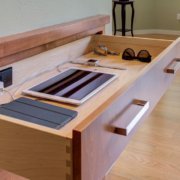
  • Hinged cabinet facade: Hiding outlets behind a hinged drawer façade allows accessibility when needed but is disguised when not in use.
  • Recessed below counter: An outlet strip can be hidden underneath a deep countertop edge, peninsula, or island overhang for easy access without compromising design.
  • Inside drawers/cabinets: A great place to install a docking station for tablets, phones, and others devices.

Creative Outlet Placement in the Bathroom

Just as in kitchens, our bathrooms must have GFCI outlets and have equally strict requirements on placement. We typically have a number of personal grooming devices that can crowd our countertops, creating a tangle of cords and a battle over outlet access. This can be resolved with creative and functional outlet placement.

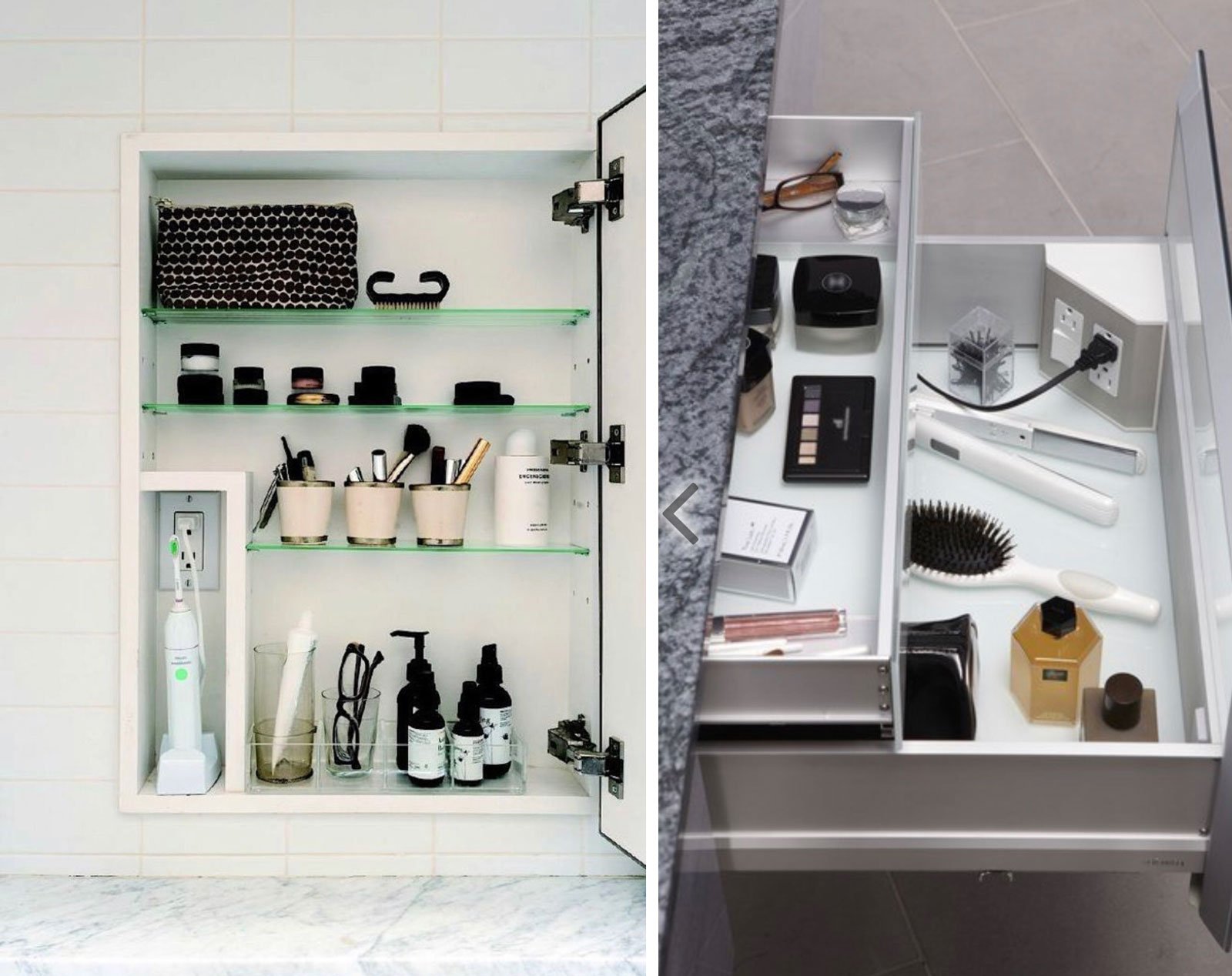
  • Medicine cabinets with built-in outlets: great for storing and charging electric razors and toothbrushes.
  • Inside cabinets: A great way to get outlets off walls is to place them inside cabinets. USB outlets allows for charging of phones, wireless speakers, and tablets.
  • Underneath counters: An ideal blend of accessibility and functionality.
  • Inside drawers: Outlets at the back of a drawer is ideal for plugging in hair styling or personal grooming devices.
  • Pop-up outlets: These low-profile outlets work well in bathrooms and can be set into the countertop.

“It’s always exciting to offer clients inventive new ways in which to integrate outlets in bathrooms and kitchens that both maximize and personalize the function and beauty of the space. Plus, the evolving technology that allows homeowners to control appliances at the touch of a button is very desirable,” shares Genie.

Are you dreaming of updating your kitchen or bath? Schedule a complementary meeting today and allow the design team at Harrell Design + Build to help you discover what’s possible.

Genie Nowicki, senior designer, holds numerous certifications in design, and is a renowned authority of Universal Design, and the recipient of multiple awards. Genie joined the Harrell Design + Build team after years of running her own successful design business. Beginning her career in the world of income tax planning, she made a career leap in 1990 to the equally “detail and code-filled world” of kitchen and bath design. Genie obtained her Certification in Professional Kitchen and Bath Design in 1992 and achieved her Certified Kitchen Designer (CID) and Certified Bath Designer (CBD) status in 1996. After passing another rigorous examination, she became a Certified Interior Designer (CID) in the State of California in 2002 and a Certified Aging in Place Specialist (CAPS) in 2006. Her experience has included residential interior design, kitchen and bath design, barrier free/Universal Design, lighting design, and participation in numerous showcase houses in the Bay area, as well as several commercial projects. Genie prides herself on listening to her clients and providing timeless design work that is appropriate to her clients, their lifestyles, and their homes. Her excellence in design has been recognized with awards, projects published in local and national magazines, and a Sunset design book, and an article she wrote was featured in the Fine Homebuilding Kitchen and Bath Annual Issue.

Incorporating Color In Cabinetry

Color is just one way homeowners can express their personality. A popular way to incorporate color is with cabinetry, which is especially popular in kitchens. Once upon a time, high-quality cabinet color choices were very limited, but these days, just about any color is available, opening up a myriad of amazing design possibilities.

Harrell Design + Build Design + Build’s award-winning Certified Kitchen Designer (CKD), Gloria Carlson, has helped numerous clients remodel their kitchens, including integrating colored cabinetry. “Using color is very personal,” Gloria explains. “Although many homeowners want a palette that uses muted color, others get pleasure from bolder colors that are more unique to them.”

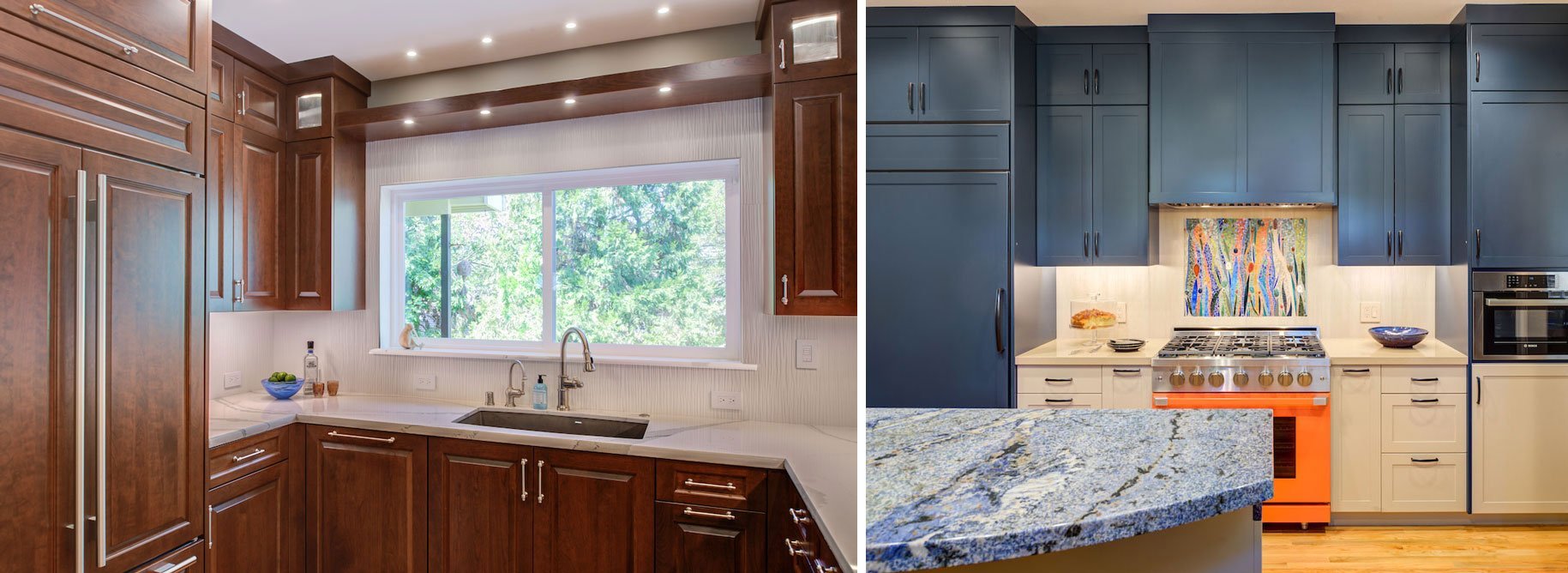
According to Gloria, the key to incorporating colored cabinets is to choose a focal point. This is an area in the room, such as a kitchen, that you immediately want people to notice. Gloria suggests choosing a feature or material that you love and working around that. It could be a unique backsplash, the island, a high-end range or vent hood, or individual colored cabinets. This focal point is the starting point around which everything else must revolve.

Choosing a cohesive, pleasing color palette is also incredibly important. Choosing complementary colors (those that are directly opposite of each other on the color wheel) work well together, or as Gloria says, they “pop each other.” Complementary colors make a bigger statement, and are more vibrant and contrasting. When homeowners want to break out of the safe color box it’s also important that they don’t overdo a good thing.

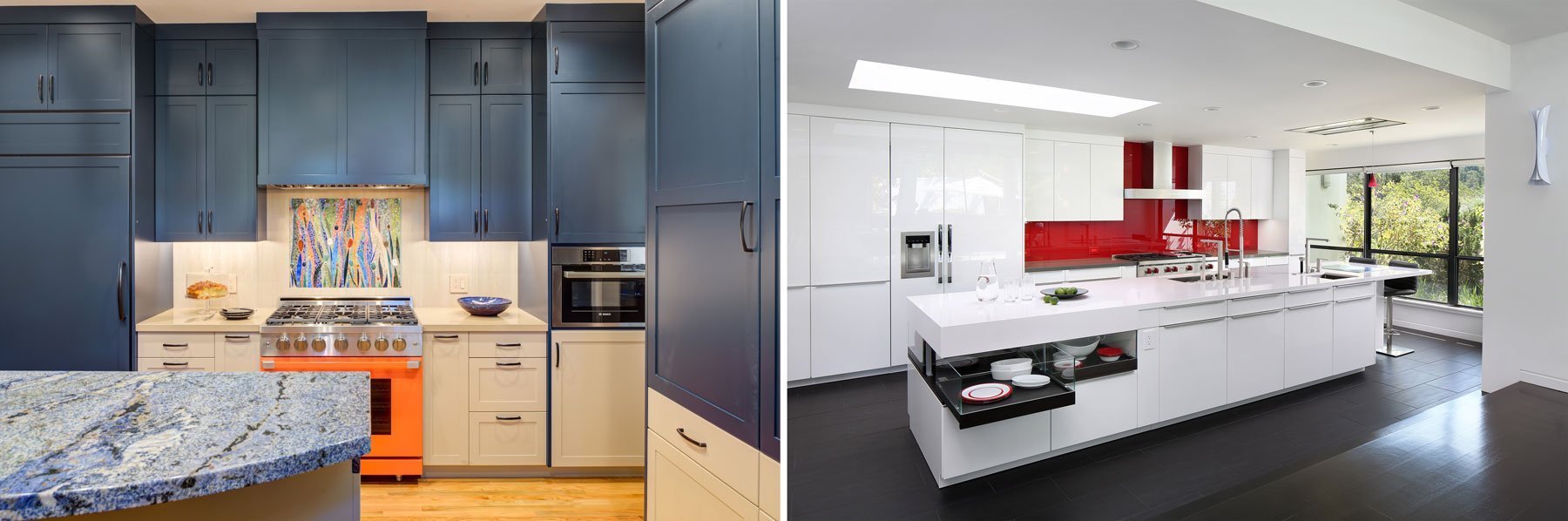
“I had a client who had already purchased their kitchen countertop material, which was a beautiful blend of blue and mushroom beige,” shares Gloria about a recent kitchen remodel. “These homeowners wanted to make a bold statement so we used the countertop colors in the cabinetry, and we complemented that with a vibrant orange Dacor range as the focal point.”

When choosing colored cabinets, Gloria generally recommends purchasing cabinets outside of California. Other states aren’t restricted to water-based paints, which enables cabinet makers to use a much more durable baked-on colored varnish.

The style of cabinet also comes into play where color is concerned. A more neutral or “safe” palette can typically be matched with just about any style of cabinet but if bold hues will be used, it is best to avoid traditional cabinetry.

Colored cabinets can be mixed and matched in a variety of ways. The upper cabinets can be one color while the lowers are another. Alternately, the island can be one hue while all the perimeter cabinets are another. Yet another option is to have individual colored cabinets, using them as a focal point. Colored cabinets can also be combined with dark or light wood cabinetry, making a very distinct visual statement.

When asked about colored cabinets, Gloria’s advice to her clients is to go for the “ROE—Return on Enjoyment versus the ROI.” If the homeowners are planning to stay in their residence for a while, Gloria encourages them to think more about their personal enjoyment of their home rather than worry about resale years down the road.

“Sometimes something that is truly unique—like that blue, mushroom, and orange kitchen combination—becomes timeless in a different way,” Gloria clarifies.

Are you exploring the idea of colored cabinetry in your kitchen? Schedule a complimentary consultation with Gloria or another of Harrell’s designers to discover how color can enhance your space and fit your personal style.

Gloria Carlson, Harrell senior designer, earned two degrees from Stanford University before beginning her career in Speech Technology. When she remodeled her home in 2001, she realized that design was her passion and true calling. She went to work for her contractor and returned to school to study Interior Design at Cañada College, where she specialized in Kitchen and Bath Design and Green/Sustainable Design. Gloria quickly realized that the kitchen was her favorite room to design, and decided to focus her years of training on this specialty, including multiple examinations from the National Kitchen and Bath Association, and earned the title of Certified Kitchen Designer (CKD). Before joining Harrell Design + Build, Gloria worked as a Designer in a Kitchen and Bath showroom, and now she enjoys designing projects of all sizes, from a small bathroom update to whole house interior and exterior remodels and additions.
Gloria prides herself on listening to her clients and providing designs that are appropriate to their lifestyles and their homes. She possesses a practical approach to her projects, creative style, and responsiveness to her client’s needs. She also is very attentive to both budget and detail. “Remodeling one’s home can be stressful, so I try to make the process as fun as possible,” says Gloria. “I listen carefully to the homeowner’s desires, whether functional, aesthetic or budgetary, and come up with a plan that will work for them. Then, throughout the project, they know they can count on me to respond quickly to questions and help with decisions.”

Gloria has won multiple awards for her designs from the local chapters of NKBA, NARI, ASID and IFDA. Outside of work, Gloria loves to play tennis, and being a “foodie”, enjoys everything epicurean.

Countertop Options for Outdoors Kitchens

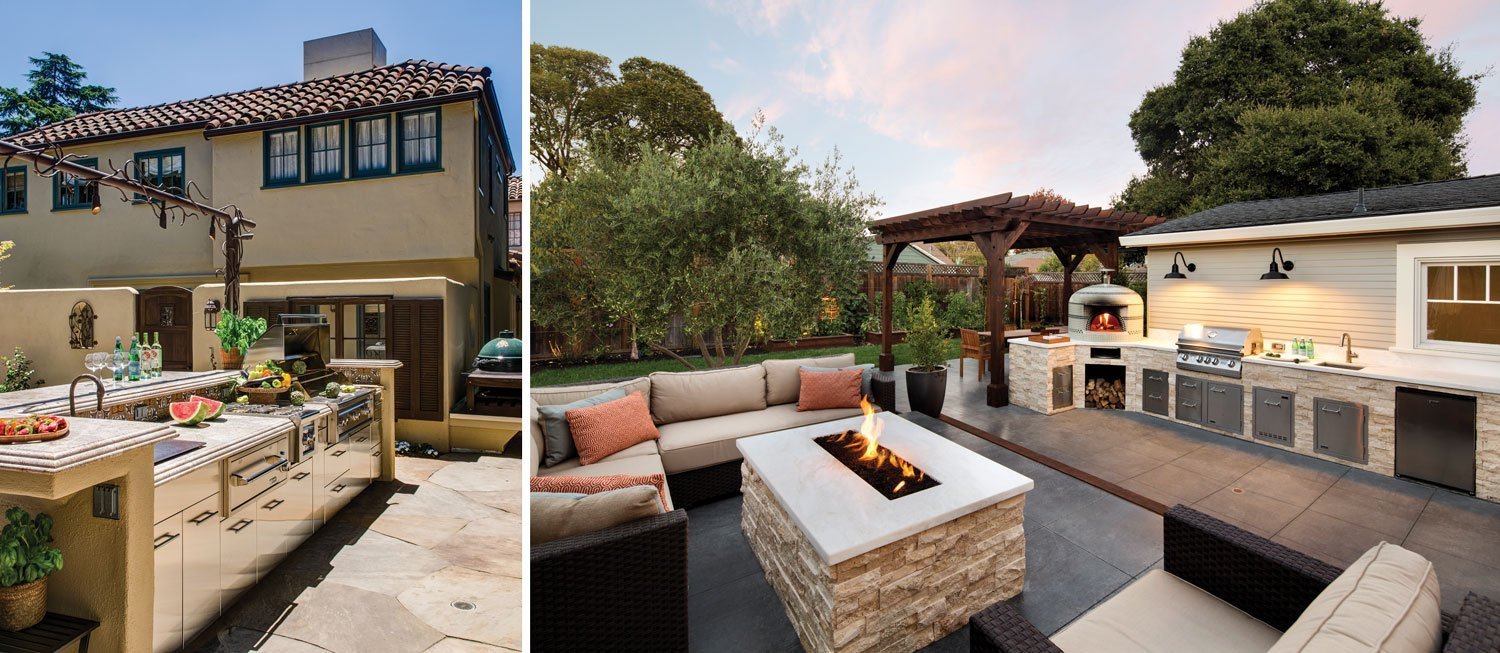
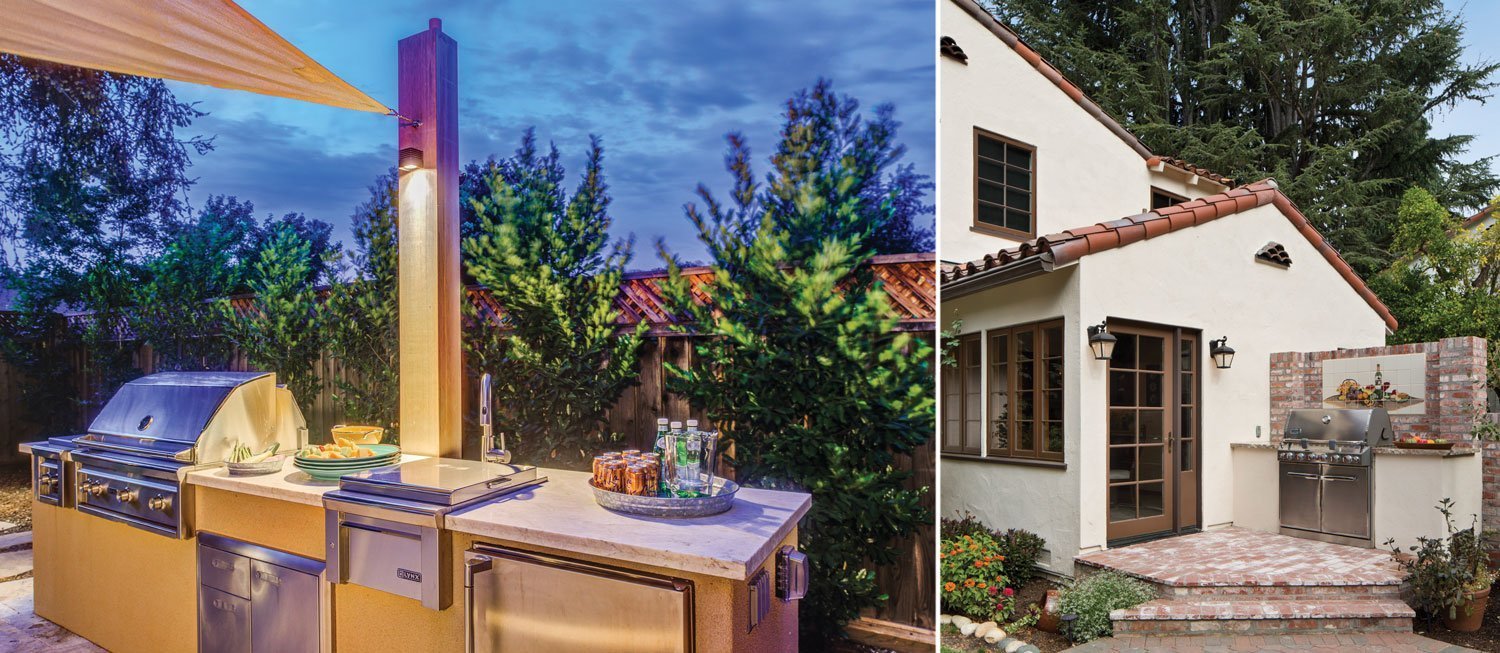
California living means outdoor living. Thanks to our state’s amazing climate, outdoor living spaces are one of the most sought-after additions to a residence and beautiful functional outdoor kitchens are a key component of these al fresco remodels.

When designing a kitchen that will be exposed to the elements, it is important to consider the materials used, especially for countertops. Harrell Designer Lisa Parramore advocates her clients choose either Quartz or natural stone for exterior kitchen surfaces.

Quartzite is a hard metamorphic rock created naturally from pure quartz sandstone while Quartz is a man-made material that offers a huge variety of looks, from solid colors to patterns that mimic the look of marble, granite, and other natural stone. Manufacturers like Cambria, Silestone, and Caesarstone have an almost endless selection of colors, styles, and finishes.

Quartz is a popular choice for countertops, but when using it outside, it is important to note that this material does not appreciate sun exposure. Quartz is best used in outdoor areas where sunlight is limited to eliminate or severely reduce any chance of fading. Manufacturers typically will not guarantee their product if it is used outsides where it receives extended exposure to direct sunlight.

Quartz lovers never fear. There is a solution to this dilemma—Ultra Compact Quartz. Manufacturers of this product include NeoLith and Dekton. No maintenance, easy care, stain, scratch, and dent-resistant, this almost indestructible material is ideal for outdoor use. Available in a variety of colors, Ultra Compact Surfaces enable homeowners to achieve their desired design aesthetic without worrying about fading, functionality, and durability.

“For clients desiring a contemporary look, I love using Ultra Compact Surfaces with powder-coated stainless steel cabinetry,” shares Lisa.

Natural stone is another popular option for use in outdoor kitchen spaces. The most popular outdoor surface products include granite and marble, each with their own pros and cons. Granite is durable, resists staining, and is readily available in a multitude of hues but extreme temperatures can comprise the integrity of the surface. It is also wise to use light colored granite if it will be exposed to sun, as darker shades will retain a tremendous amount of heat.

“Part of the beauty of granite is its naturally occurring, shimmering crystals but severe heat and cold can result in the stone cracking,” Lisa clarifies.

Marble is another stunning surface that homeowners love. Though it doesn’t fade, marble can stain if not properly maintained. For those who don’t mind a “patina,” marble is a viable outdoor option but if the possibility of discoloration makes you, cringe, marble may be a material to avoid.

In the majority of her outdoor kitchen designs, Lisa uses granite, Quartzite, and Ultra Compact Surfaces. Marble typically has a polished finish, while granite can be either honed or polished. Depending upon the Quartz product chosen, they can have a low sheen, high gloss,  or even a velvety-soft suede finish.

“I always recommend checking with the fabricators when deciding upon exterior materials and their planned location. Their in-depth knowledge is invaluable to retaining your product warranty as well as ensuring the surface chosen meets your needs and expectations,” Lisa advises.

Lisa Parramore is Harrell Design + Build’s award-winning certified Professional Landscape Designer. She is passionate about creating indoor-outdoor living spaces that inspire her clients to embrace and celebrate the California lifestyle. With her ability to beautifully integrate a home’s interior with the outdoors, Lisa brings a distinct vision and design sense to the Harrell Team.

Are you thinking of adding an outdoor kitchen or living space to your home? Now is the perfect time to start a conversation with one of our designers about creating an outdoor space that fits your lifestyle.

Color Trends for 2019

The colors we choose for our home speak volumes about our personality and style. When it comes to color, some homeowners are more adventurous while others lean toward hues that are mild and understated yet still convey individuality.

Color has a direct impact on our emotions. Some homeowners desire an overall neutral palette that creates a pleasing, tranquil space while others prefer introducing lively hues that provoke an energetic atmosphere. Whatever your preferred palette profile, there are many ways to introduce color into your home.

Clothing is the catalyst for residential color trends, working its way from fashion into our living spaces. For the past few years, gray has been a forerunner in the neutral color space, replacing browns and beiges that once graced the walls of many a Bay Area home.
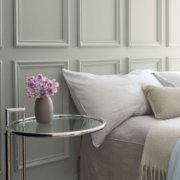
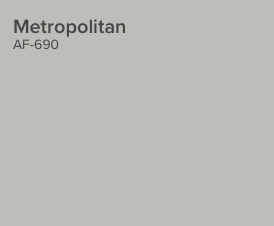
In keeping with this popular color inclination, Benjamin Moore’s Color of 2019 is Metropolitan,  an adaptable, stylish, and understated neutral gray. The company also creates a coordinating color palette designed to work beautifully with their starring hue.

Says Ellen O’Neill of Benjamin Moore, “Metropolitan AF-690 emanates nuance, harmony and extravagant ease. Always adaptable, it softens to matte or shimmers with sheen. It’s neutral. It’s understated. It just is. This is color, off-duty.”

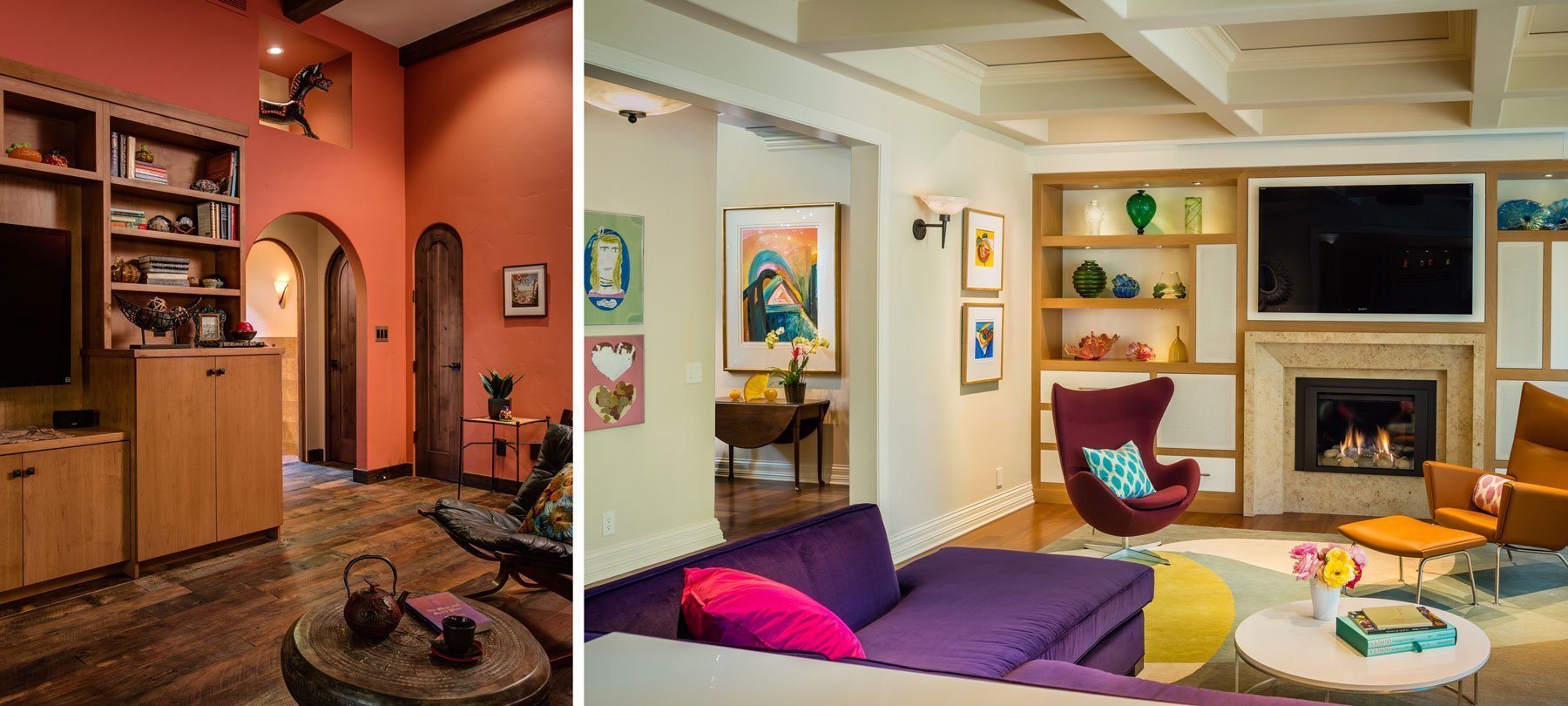
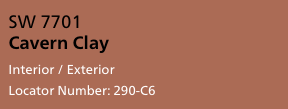
Sherwin Williams has traveled down a different path with their rich terracotta hue, Cavern Clay,  the earthy quality of which works well as an accent wall coupled with neutral tones or as a standalone color, infusing a warm sophistication to an entire room.
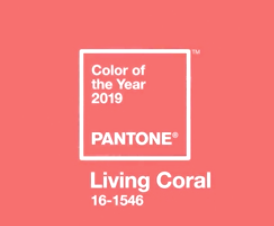
Pantone recently announced that their Color of the Year for 2019 is Living Coral, which they describe as “an animated, life-affirming coral hue with a golden undertone that energizes and enlivens.” Vibrant and at the same time soothing, Living Coral embodies our “need for optimism,” providing a sociable, spirited, and playful manner in which to invite connection and intimacy in our home environment.
Other color palettes are finding their way from the runway into hallways, kitchens, and livings spaces. Turquoise, navy blue, metallic including gold and rose gold, and matte black are trending in popularity as homeowners personalize with pigments in a myriad of manners. Adding vibrant pops of color is a great way to infuse character and playfulness throughout your home. Colored cabinets, entry doors, countertops, accent walls, and tile are all wonderful ways to introduce color.

“Navy and other blue tonal values are making headway especially when accented with gold,” explains Harrell Designer, Sara Jorgensen. “In the kitchen, painted cabinets are taking things by storm. Navy works beautifully as a cabinetry color especially when accentuated with gold hardware.”

In addition to navy, gray and white tones are popular palettes for kitchen cabinets. Islands offer an ideal way to introduce accent colors; wood tones are trending as popular ways in which to highlight kitchen islands.

As for metallics, while chrome and satin/brushed nickel remain much-loved among homeowners, brushed brass, rich gold, and the elegance of rose gold are finding a foothold in homes. Drawer pulls and knobs, lighting, and fixtures are classic ways in which to tie in metallic throughout your home.

“Tile is another way to pull in color and texture into a room,” says Sara.

Geometric tiles, especially in black and white, create a high contract focal point.  Tile backsplashes behind cooktops can be designed as a beautiful mosaic or a simply stunning accent. Shower niches are another way to imbue color into a bathroom that otherwise may embrace a neutral palette.

Your home is a blank canvas and the colors you choose for your living spaces are as individual as you. The design team at Harrell Design + Build has their fingers on the pulse of the latest trends. Armed with that information plus your personal preferences, we will make your home come alive with color!

Call us today to schedule a design consultation with a Harrell Designer to discuss your next remodeling project.

Clever Storage for Corners in Kitchens